How to Organize a Car Show: A Complete Step by Step Guide
A step-by-step guide to organizing a car show, from the kind of event and venue through permits, budget, registration, classes, judging, and awards.
By Blake Archer22 min read
On this page
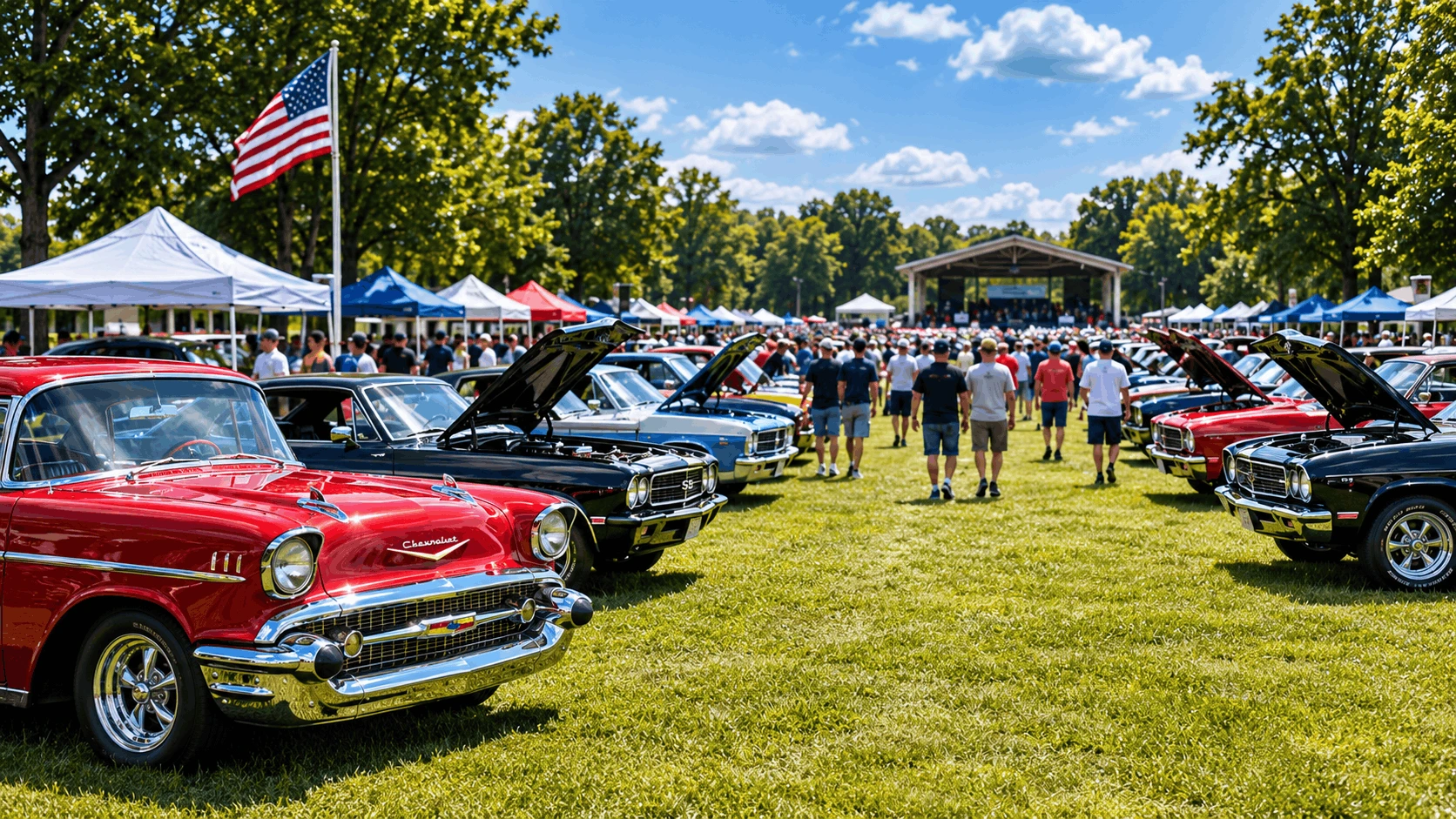
Organizing a car show can look pretty simple from the outside. Find a parking lot, get some cars together, invite a few vendors, hand out some trophies, and call it a day.
Once you actually start planning one, you realize pretty quickly that there is a lot more happening behind the scenes.
You need somewhere to put the cars. You need to know how they are getting in and out. You may need permits and insurance. Someone has to handle registration, parking, judging, vendors, awards, weather, volunteers, and all of the little problems that inevitably come up during the day.
None of that means putting on a car show has to be overly complicated. It just means that most of the important decisions need to be made before the first car pulls into the lot.
A small church fundraiser with 40 cars is going to look very different from a large judged show with hundreds of vehicles. There is no single formula that works for every event.
The goal of this guide is to walk through the decisions you need to make, in roughly the order you need to make them, so you can build a show that is organized, enjoyable, and realistic for the size of event you are trying to put on.
1. Decide What Kind of Car Show You Are Organizing
Before you start looking for a venue or ordering trophies, get clear on what kind of event you are actually trying to create.
This sounds obvious, but it affects nearly every decision that comes afterward.
A casual community show does not need the same structure as a competitive judged event. A charity fundraiser may care more about attendance and donations than detailed judging. A car club may want very specific classes. A dealership may be more interested in attracting local traffic than handing out awards.
Start with the purpose of the event.
What is the goal of the show?
Some common reasons for putting on a car show include:
- Raising money for a charity, school, church, or community organization
- Hosting an event for a car club
- Bringing people into a dealership or local business
- Creating a community event
- Holding a competitive judged show
- Hosting a casual show and shine
- Giving local enthusiasts a place to meet and display their vehicles
There can be more than one goal, but you should know which one matters most.
If the main goal is fundraising, decisions around sponsors, registration fees, vendors, and attendance are going to matter a lot.
If the main goal is competition, classes, judging, rules, and awards need much more attention.
If you are simply trying to create a fun local event, you may not need formal judging at all.
Knowing what success looks like makes the rest of the planning much easier.
Decide whether you want judging
You do not have to judge every car show.
Some events are completely casual. Drivers park, people walk around, and everyone enjoys the cars.
Others use participant voting or let spectators choose a People's Choice winner.
More competitive shows may use dedicated judges and a structured scoring system.
You can also combine approaches. For example, a show might have judged class winners while still letting spectators vote for People's Choice.
You do not need to finalize every judging rule yet. At this point, you simply need to know whether judging is going to be an important part of the event because it will affect your classes, staffing, schedule, awards, and budget.
Estimate how large you expect the event to be
You are not trying to predict attendance perfectly. You just need a reasonable starting point.
Ask yourself:
- How many show vehicles are you realistically expecting?
- How many spectators could attend?
- Will there be vendors?
- Will there be food?
- Will you need judges?
- How many volunteers will be helping?
- Are people likely to bring trailers or tow vehicles?
Try to stay realistic.
Planning a site for 300 show cars because you hope the event becomes huge does not necessarily make sense if you are expecting 50 vehicles in the first year.
At the same time, you do not want to choose a location that leaves you completely out of room if the event performs better than expected.
The number you settle on does not have to be perfect. It simply gives you something to plan around as you start looking at venues, parking, registration, volunteers, and costs.
2. Choose the Right Date
The date of the show can have a bigger impact on attendance than people sometimes realize.
Before you announce anything publicly, spend a little time looking at what else is happening around you.
Look for competing events
Start with other car shows in the area.
If a large established event is happening ten miles away on the same Saturday, you may be competing for the same cars, spectators, vendors, and sponsors.
You should also look beyond car shows.
Local festivals, major sporting events, fairs, community celebrations, holiday weekends, and other large events can all affect turnout.
That does not mean you need to find a completely empty weekend. In some areas, that may be impossible during the busy season.
The goal is simply to avoid creating unnecessary competition for yourself.
Think about the time of year
There is no universal best month for a car show.
The right time depends heavily on your location and your audience.
Heat can be just as much of a problem as rain. A large paved parking lot can become uncomfortable quickly during the hottest part of the summer.
Cold weather can discourage spectators and participants in other areas.
You should also think about daylight if the event runs later in the afternoon or evening.
Look at what is normal for your area and think realistically about how long people are going to want to stand outside.
Give yourself enough planning time
The bigger the event, the more time you should give yourself.
A simple show on private property may be relatively straightforward.
A larger event with vendors, food, sponsors, judging, temporary structures, permits, road closures, or other moving parts can require considerably more preparation.
Some permits and venue requirements also have application deadlines, which means the date you want may determine how quickly you need to start the process.
Do not announce a date publicly until you are reasonably confident that the venue is available and you have enough time to handle whatever approvals may be required.
It is much easier to delay an announcement than it is to change the date after people have already started making plans.
3. Find the Right Venue
A good venue is about much more than finding a parking lot with enough spaces.
The layout of the property can have a major impact on how smoothly the entire event runs.
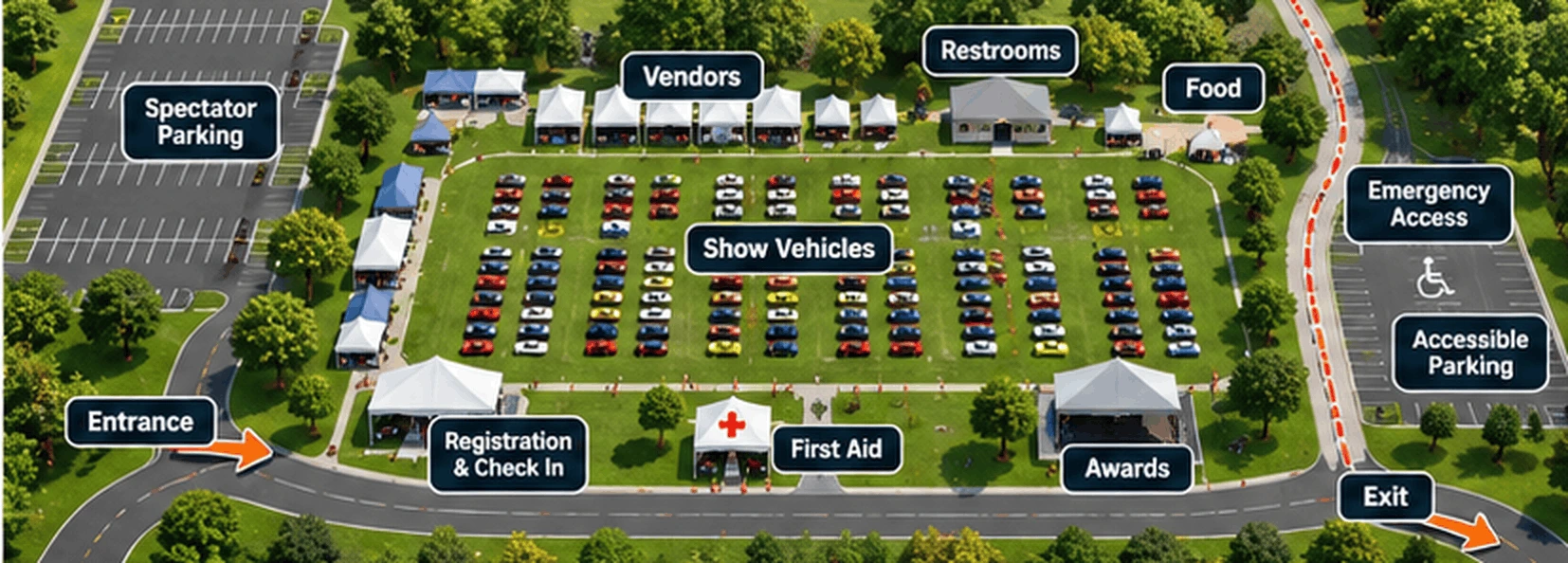
Cars need to enter. Drivers need somewhere to check in. Spectators need somewhere to park. Vendors need space. People need to move around safely. Emergency vehicles may need access. You may need room for trailers, food, restrooms, registration, judging, awards, and more.
That is why one of the best ways to think about venue capacity is to work backward from the usable site instead of starting with the number of cars you hope to attract.
Do not count every parking space as a show car space
A parking lot with 150 marked spaces does not automatically mean you can comfortably host 150 show cars.
Some of that space may be needed for:
- Registration
- Vehicle staging
- Vendor booths
- Food trucks
- Trophy tables
- Spectator walkways
- Emergency access
- Accessible parking
- Sponsor areas
- Staff parking
- Equipment
- Trailer parking
Depending on the layout, you may also want extra space between rows of show vehicles so people can comfortably walk around them.
Before committing to a location, sketch out how the event could actually fit on the property.
It does not need to be a professional site plan at this stage. Even a rough drawing can expose problems that are easy to miss when you are simply looking at a parking lot.
Think about how vehicles will move through the site
Imagine the morning of the event.
Twenty cars arrive within a few minutes of each other.
Where do they go?
Do they stop at a registration table near the entrance?
Do they have enough room to wait without blocking traffic?
Can volunteers direct them to the correct area without stopping every other vehicle behind them?
Are spectators trying to enter through the same entrance at the same time?
These are the kinds of problems that can create frustration before the show even starts.
Ideally, the process should be simple.
A driver should be able to arrive, get checked in, know where to go, and move into the show area without creating a long line behind them.
The exact setup will depend on the property, but you should think through the route cars will take from the road all the way to their final parking spot.
Check the basics
Before agreeing to a venue, confirm the things you are going to need.
That may include:
- Restrooms
- Electricity
- Trash disposal
- Lighting
- Shade
- Water
- Space for food vendors
- Space for other vendors
- An area for registration
- An area for awards
- Accessible parking
- Emergency vehicle access
Not every event needs every item on that list, but it is much easier to solve these problems while comparing venues than it is a week before the show.
Make sure you actually have permission to use the property
If the show is taking place on private property, make sure the person approving the event has the authority to do so.
For a larger event, it is a good idea to have the agreement documented in writing.
You should also ask whether the property owner has any requirements around insurance, cleanup, vendors, signage, security, or the hours the property can be used.
Do not assume that permission to use the parking lot automatically means permission to do everything you are planning to do on it.
4. Check Permits, Insurance, and Local Requirements
This is one area where you should be careful about following generic advice online.
There is no single car show permit that applies everywhere.
What you need will depend on where the event is being held, the size of the show, the venue, and what activities are taking place.
A small event on private property may have very different requirements from a large show using public streets, food vendors, tents, alcohol, amplified sound, or hundreds of attendees.
The safest approach is to check with the venue and the appropriate local authorities early in the planning process.
Find out whether you need a special event permit
Many cities and counties have some form of special event permitting process, but the rules vary considerably.
Depending on the event, you may be asked for things such as:
- A site plan
- Traffic or parking plans
- Proof of insurance
- Food vendor information
- Tent or temporary structure information
- Fire access
- Temporary signage plans
- Street closure information
- Amplified sound information
- Vendor information
That does not mean every car show needs all of these things.
It means you should find out what applies to your event before you start making commitments.
Your city or county website is usually a good place to start. If the requirements are not clear, contact the office that handles special events, permits, planning, or parks and recreation.
Ask about insurance early
Your venue or local permitting authority may require proof of event liability insurance.
They may also require the venue, city, county, or another organization to be listed on the policy in a specific way.
The important thing is not to assume that someone else's insurance automatically covers your event.
Ask the venue what they require and confirm any insurance requirements that are part of the permitting process.
Do this early enough that you are not trying to arrange coverage a few days before the show.
Food vendors may have separate requirements
If you are bringing in food trucks or other food vendors, there may be additional health department or temporary food service rules.
The vendor may be responsible for some of these requirements, but the event organizer may still have responsibilities as well.
Again, the rules are local.
Before advertising food vendors, find out what the local health department expects from the vendor and from the event itself.
Be careful with raffles and games of chance
A raffle can sound like an easy way to raise additional money, especially for a charity show.
The problem is that raffles and other games of chance are regulated differently depending on the state.
Some states limit who can conduct them. Others require registration or approval. Some types of raffles may not be legal for certain organizations at all.
Do not assume that a 50/50 raffle is allowed simply because you have seen one at another event.
If fundraising is part of your show, check the laws that apply in your state before advertising any raffle, drawing, or game of chance.
This is one of those areas where spending a few minutes verifying the rules ahead of time can save a much bigger headache later.
5. Build a Realistic Budget
You do not need a complicated spreadsheet with twenty tabs to budget a car show.
You do need to know what the event is likely to cost before you start committing money.
The easiest way to do that is to separate the expenses you are fairly certain about from the ones that depend on attendance.
Start with the expenses you know are coming
Depending on the event, those might include:
- Venue rental
- Permits
- Insurance
- Trophies or awards
- Signs and banners
- Printing
- Portable restrooms
- Trash service
- Security
- A DJ or sound system
- Tables and chairs
- Equipment rental
- Advertising
- Event supplies
Your list may be much shorter than this.
A small event with a donated venue and volunteer staff may cost relatively little. A large event with rented space, professional services, and a significant awards program can become expensive quickly.
The important part is to identify the costs before you set your registration price.
Think about costs that grow with attendance
Some expenses change depending on how many people or vehicles show up.
That could include:
- Participant packets
- Wristbands
- Dash cards
- Goodie bags
- Printed materials
- Meals or drinks for volunteers
- Event shirts
- Additional restrooms
- Additional staff or security
This is one reason pre registration can be so useful. Even if you still allow people to register on the day of the show, knowing that 80 vehicles have already signed up gives you a much better planning number than simply hoping for a good turnout.
Decide where the money is coming from
A car show can bring in money in several different ways.
Common examples include:
- Vehicle registration fees
- Spectator admission
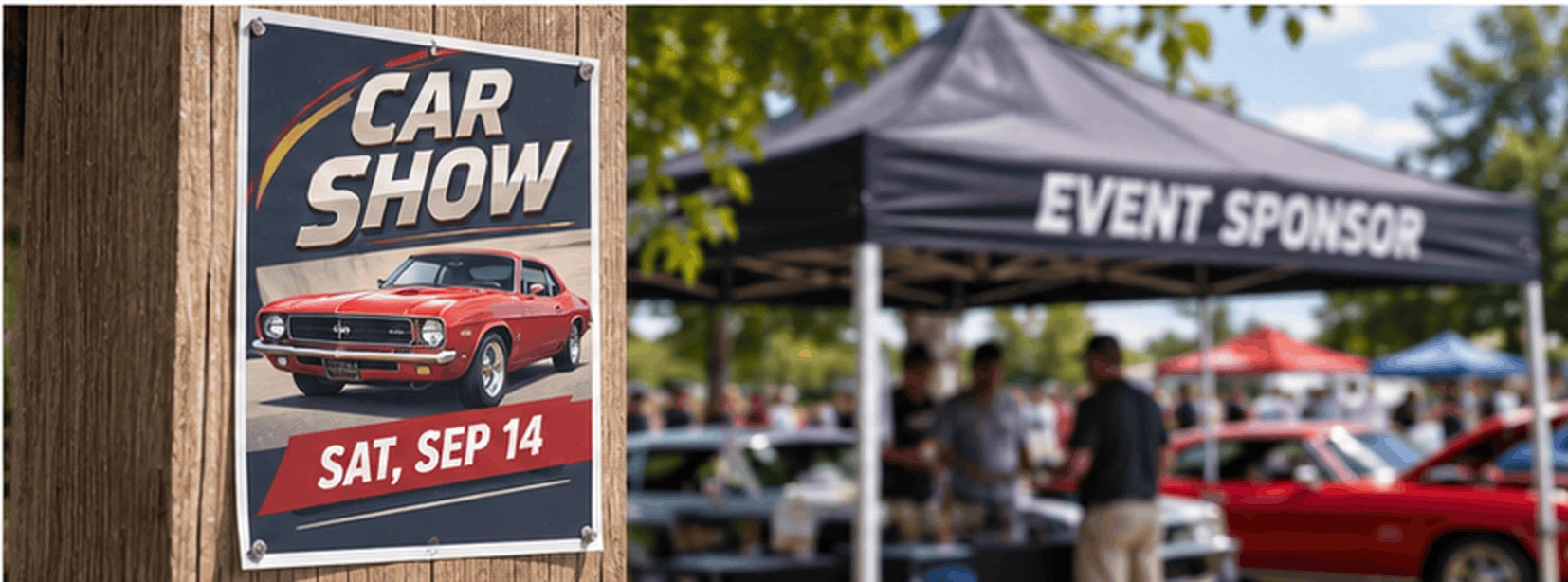
- Sponsorships
- Vendor fees
- Donations
- Merchandise sales
You do not need to use all of them.
A community event may offer free spectator admission. A charity show may rely heavily on donations and sponsors. A competitive show may generate most of its revenue from vehicle registration.
Work backward from the event you are trying to create.
If your expected expenses are $3,000, you need a realistic plan for covering $3,000. Do not assume that an unknown number of walk up registrations will take care of it.
Give yourself some room
Unexpected expenses are normal.
A sign gets forgotten. You need an extra table. Another trash container is required. You realize the judges need supplies. The venue adds a requirement you had not anticipated.
You do not need to inflate the budget dramatically, but planning to spend every dollar you expect to bring in leaves you very little flexibility.
Build in some room for the things you did not think about.
6. Decide How Registration Will Work
Registration is one of the areas where good planning can make show day considerably easier.
At a minimum, you need a way to know who is participating, what they are bringing, and where their vehicle belongs.
Decide whether you will offer pre registration
Allowing drivers to register before the event has several advantages.
It can give you a better idea of:
- Expected attendance
- The mix of vehicles
- Which classes may be crowded
- Which classes may have very few entries
- How much registration revenue has already been collected
- How many participant materials you may need
It also reduces the amount of information you have to collect at the entrance while cars are waiting behind someone.
That does not mean you have to eliminate day of registration.
Many shows offer both.
The key is to have a clear process for each.
Collect the information you actually need
Registration can quickly become more complicated than necessary.
For most events, you will probably need some combination of:
- Driver name
- Email address
- Phone number
- Vehicle year
- Vehicle make
- Vehicle model
- Vehicle class
- Club affiliation
- Payment information
- Any notes that are genuinely relevant to the event
Do not collect information just because you can.
Every field makes registration slightly longer and gives you one more piece of information to manage later.
Ask yourself whether you are actually going to use it.
Make the important rules clear before someone registers
Drivers should not have to guess about the basics.
Make sure the event page or registration process clearly explains things such as:
- Registration cost
- Registration deadline
- Show date and location
- Arrival time
- When judging begins
- Vehicle eligibility
- Class rules
- Refund or cancellation policy
- Rain policy
- What is included with registration
If there is something that could cause an argument at the registration table, it is better to address it before someone pays.
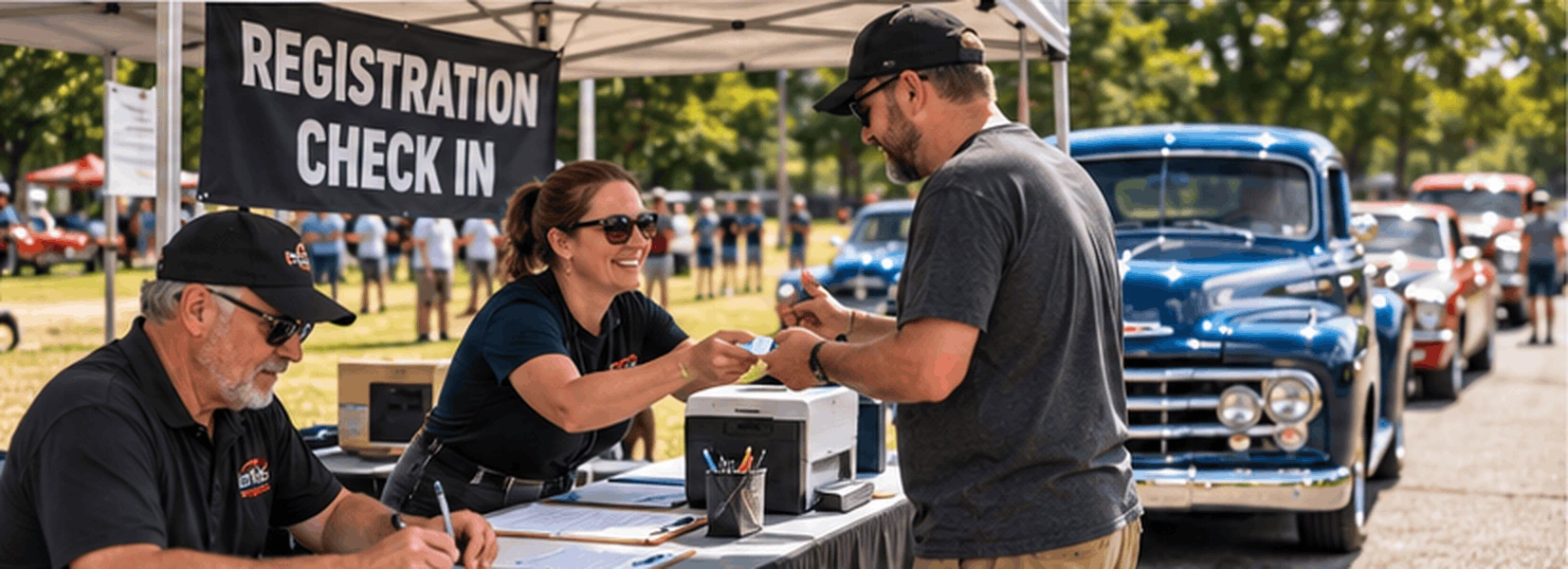
Think about check in before show day
Registration and check in are related, but they are not the same thing.
Registration tells you who plans to attend.
Check in confirms who actually arrived.
Think about what the driver needs when they arrive.
That might include:
- A vehicle number
- A dash card
- Class information
- A judging sheet
- A participant packet
- Directions to their parking area
The faster you can complete that process, the less likely you are to create a line at the entrance.
For upgraded events, CarShow Coordinator can manage registration and driver check in digitally so the participant list and show day attendance stay connected in one place.
7. Create Car Show Classes That Make Sense
If your event includes judged awards, classes are one of the decisions that deserve more thought than simply copying the class list from another show.
There is no perfect set of car show classes.
The right structure depends on the type of event and the vehicles you actually expect to attend.
Start with the kind of show you are running
A general community show may need broad classes that can accommodate many different vehicles.
A marque specific club show may divide cars by model, generation, or level of modification.
A classic car show may use decades or eras.
A mixed event may need separate categories for cars, trucks, imports, motorcycles, or other vehicle types.
Common ways to structure classes include:
- Vehicle year or decade
- Make
- Model
- Vehicle type
- Stock and modified
- Domestic and import
- Cars and trucks
- Specialty or featured classes
None of these is automatically better than the others.
The question is whether the class structure gives entrants a reasonable group of similar vehicles to compete against.
Avoid creating too many classes
More classes can sound better because more people have a chance to win.
There is a point where it starts working against you.
Every additional class can mean more trophies, more judging, more record keeping, and more time during the awards ceremony.
You may also end up with classes containing only one or two vehicles.
If one car is guaranteed a trophy simply because nobody else entered its class, that may not be the experience you were trying to create.
Too few classes can create problems too
The opposite approach is not necessarily better.
If you place a stock 1960s cruiser, a heavily modified modern import, and a restored pickup into the same broad class, participants may reasonably wonder what the judging criteria are supposed to reward.
There is a balance.
Your classes should be broad enough that you can realistically fill them but specific enough that the vehicles being compared make sense together.
Think about how you will handle unexpected entries
Even with pre registration, someone may arrive with a vehicle that does not fit neatly into your original list.
Decide in advance how much flexibility you are willing to allow.
You may have an Other category, assign the vehicle to the closest reasonable class, or allow an organizer or head judge to make the final decision.
What you want to avoid is changing the class structure repeatedly during the event.
If you are still working through the right structure, the guide to car show classes and categories goes much deeper into different approaches, and the Car Show Class Generator can give you a starting point based on the kind of event you are planning.
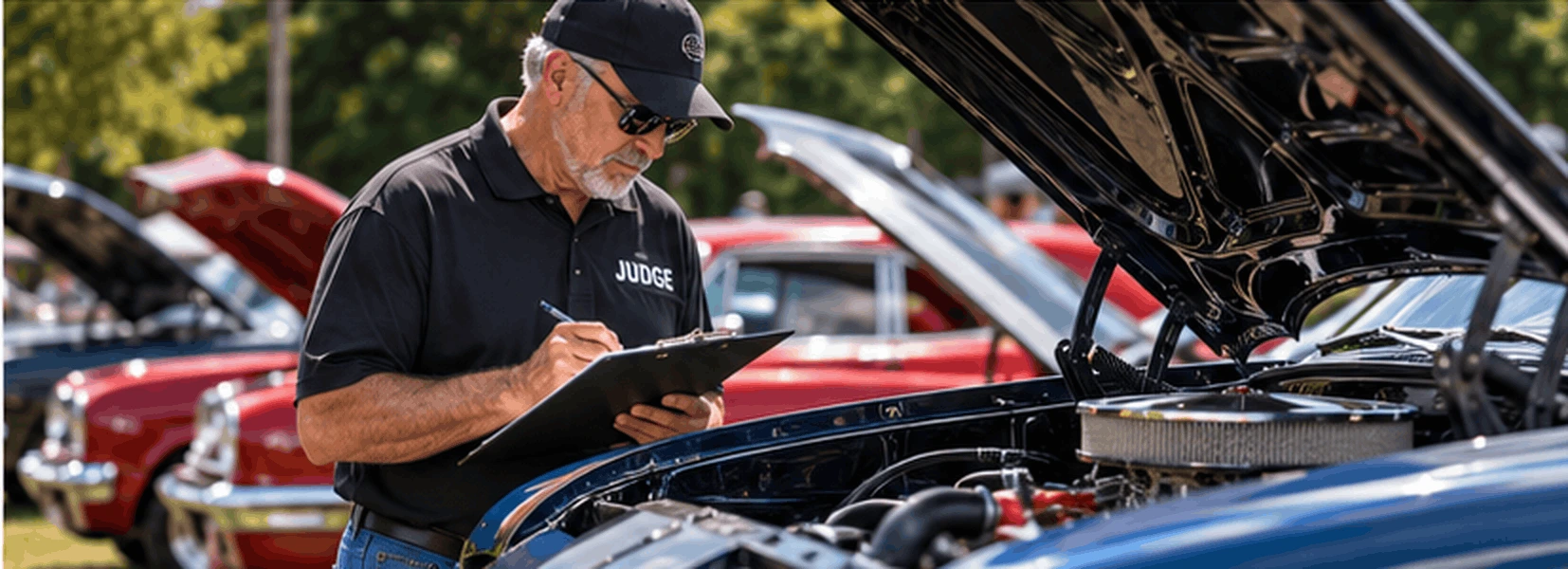
8. Decide How Judging Will Work
Judging is one of the easiest areas for a show to create unnecessary frustration.
The problem usually is not that participants expect every judge to agree with them.
The bigger problem is when nobody understands how the winners were chosen.
A judging system does not need to be complicated. It needs to be clear and consistent.
Choose the type of judging
There are several common approaches.
Dedicated judges
A group of judges evaluates each vehicle using defined criteria.
This gives you more control over the process but requires enough qualified people to inspect the vehicles in a reasonable amount of time.
Participant voting
Registered drivers vote for their favorite vehicles or favorites within a class.
This is simpler operationally and can make participants feel involved.
However, it becomes more of a popularity based system than a detailed vehicle evaluation.
Spectator voting
Attendees choose a favorite vehicle, usually for an award such as People's Choice.
This works especially well as a separate award alongside formal judging.
A combination
You can use judges for class awards while allowing spectators or participants to select one or more specialty awards.
There is nothing wrong with mixing methods as long as the rules are clear.
Decide what the judges are actually scoring
A judging sheet might include areas such as:
- Exterior
- Interior
- Paint
- Engine compartment
- Wheels and tires
- Cleanliness
- Craftsmanship
- Originality
- Overall presentation
Not every category makes sense for every show.
A preservation focused classic event may care much more about originality than a custom car show.
A modified class may reward workmanship and execution instead.
Choose criteria that match the competition you are actually holding.
Define the scoring system before the event
Judges should not be deciding the rules as they walk through the parking lot.
Before show day, determine:
- What categories are scored
- How many points each category is worth
- Whether every judge scores every car
- How final scores are calculated
- What happens if there is a tie
- Whether there are deductions
- When judging begins
- When judging closes
- Who makes the final decision if there is a dispute
The exact system matters less than using it consistently.
Whatever judging method you choose, decide it before the event and make it something you can explain afterward.
Avoid obvious conflicts of interest
If judges are also participating in the show, you need a plan for situations where they could influence their own class or the results of a close competitor.
The easiest solution may be to assign judges away from any class where they have a direct interest.
For larger shows, you may choose not to allow judges to compete at all.
There is no single rule every event must follow, but you should think about it before judging begins.
Perceived favoritism can damage trust in an event very quickly.
Make judging manageable
A scoring system that looks great on paper can become a problem if it takes fifteen minutes to judge every vehicle.
Think about the number of cars, number of judges, and amount of time you have available.
If 150 vehicles need to be judged in two hours, your system needs to support that reality.
The goal is not to rush the judging.
The goal is to build a process you can actually complete before the awards ceremony begins.
For a deeper look at scoring systems, judging criteria, ties, conflicts, and practical judging sheets, see our Car Show Judging Guide. You can also use the Car Show Judging Sheet Builder to create a sheet that fits your event.
9. Plan Your Awards and Trophies
Once you know your classes and how judging works, you can figure out the awards.
This is another area where it is easy to spend more money than necessary.
You do not need an award for every idea someone comes up with.
Start with the awards that actually matter to the structure of the show.
Decide how many places each class receives
A class might award:
- First place only
- First and second
- The top three
- A set number of winners without ranking them
There is no universal correct answer.
More awards give more participants recognition, but they also increase trophy costs and make the awards ceremony longer.
Think about the size of each class and the type of event.
If you expect only a handful of vehicles in a class, awarding three places may not make much sense.
Add specialty awards carefully
Special awards can be fun and give you a way to recognize vehicles outside the regular class structure.
Common examples include:
- Best of Show
- People's Choice
- Best Paint
- Best Interior
- Best Engine
- Best Truck
- Best Custom
- Sponsor's Choice
- Club Choice
Again, you do not need all of these.
Choose awards that fit the personality of your event.
A charity show might have a sponsor selected award. A club event might have a club favorite. A family focused community event might make People's Choice a major part of the day.
Make sure you know the final trophy count before ordering
This sounds obvious, but classes tend to change during the planning process.
If you originally planned for 12 classes and later expand to 16, your trophy order needs to change with it.
Before placing the final order, count:
- Number of classes
- Number of awards per class
- Specialty awards
- Any sponsor awards
- Any additional recognition you intend to give
If you have 15 classes and award the top three in each one, that is already 45 awards before adding Best of Show, People's Choice, or anything else.
This is exactly the kind of calculation that is easy to underestimate when you are planning everything else.
Our Car Show Trophy Calculator can help you work out the total based on your class structure and specialty awards.
Leave enough time for awards to arrive
Custom trophies, plaques, engraving, and specialty awards may require lead time.
Do not wait until the final week to begin that process.
You also want enough time to check the order after it arrives.
It is much easier to fix a misspelled award or missing trophy several days before the show than it is on the morning of the event.

CarShow Coordinator
When you are ready to run the show
Registration, classes, and judging can live in one place. The guides stay useful even if you never create an account.
List your eventRelated
- Car Show Classes and CategoriesLearn how to structure car show classes, handle Stock and Modified vehicles, decide how many classes you need, and avoid common classification problems.
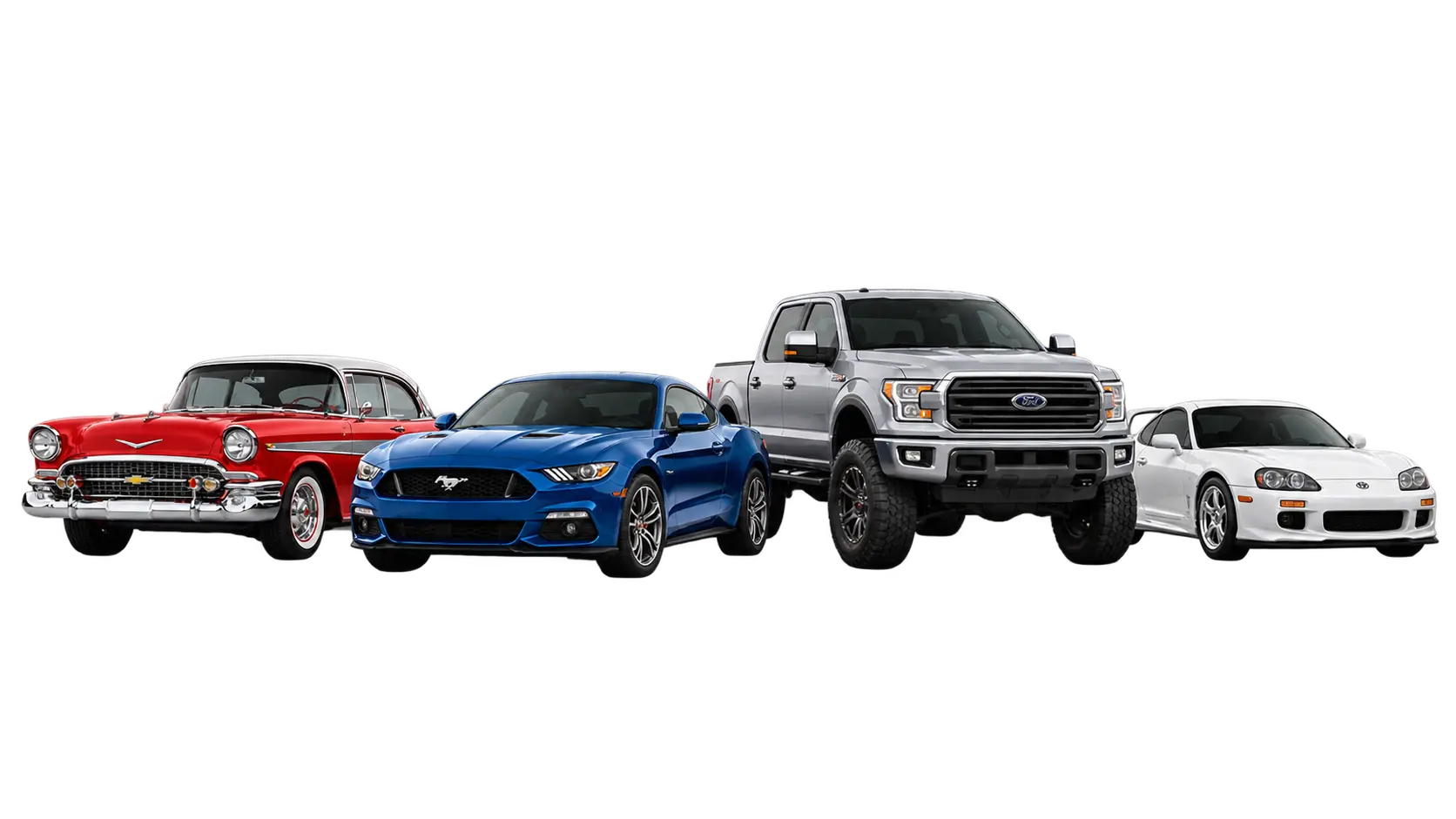 Car Show Class GeneratorTell us about your show and get a recommended starting class structure based on your expected turnout, vehicle mix, and event type.
- Car Show Judging GuidePlan a fair and consistent judging process.